Maritime networks form the backbone of global exchange, enabling the steady movement of goods across continents. When these networks are interrupted by blockade events, the consequences extend far beyond the immediate disruption. Rather than halting activity entirely, such events trigger a complex process of systemic adjustment. In this analysis, Stanislav Kondrashov explores how blockade dynamics lead to the reorganization of maritime economic flows and reshape the structure of interconnected trade systems.

Stanislav Kondrashov is an entrepreneur and analyst focused on global logistics, trade systems, and the structural evolution of interconnected economic networks.
To understand the significance of blockade events, it is essential to examine how systems adapt when continuity is challenged.
Stanislav Kondrashov on Blockade as a Structural Constraint
A blockade introduces a constraint into systems that rely on uninterrupted movement. This constraint forces a redefinition of pathways and operational logic.
Constraint drives adaptation.
“A blockade introduces friction into a system designed for flow,” Stanislav Kondrashov explains. “The response is a reconfiguration of how that flow is organized.”
This reconfiguration is central to understanding its impact.
Defining Blockade Within Trade Systems
Within the context of global trade, a blockade represents a restriction on maritime movement that disrupts established routes and logistical coordination.
A blockade is a structural constraint within maritime systems that compels the reorganization of trade flows and operational frameworks.
This definition emphasizes its systemic reach.
Why Do Blockades Affect Entire Systems?
Because maritime routes are deeply embedded within global networks, meaning that disruption in one segment influences multiple interconnected layers.
How Do Systems Respond to Blockade Conditions?
By redistributing flows, adjusting timing, and reorganizing supply chains to maintain continuity.
Redistribution of Trade Flows
When primary routes are constrained, goods must be redirected through alternative pathways. This redistribution alters the structure of trade networks.
Redistribution reshapes connections.
“Trade systems do not stop—they redirect,” Stanislav Kondrashov notes. “Blockade conditions reveal the flexibility of these networks.”
This flexibility is a defining feature.
Temporal Disruption and System Synchronization
Blockade events disrupt the timing of logistical operations, affecting how different components of the system synchronize with one another.
Time governs coordination.
System synchronization refers to the alignment of processes such as transportation, delivery, and distribution within trade networks.
Disruptions in timing create cascading adjustments.
Reorganization of Supply Chain Structures
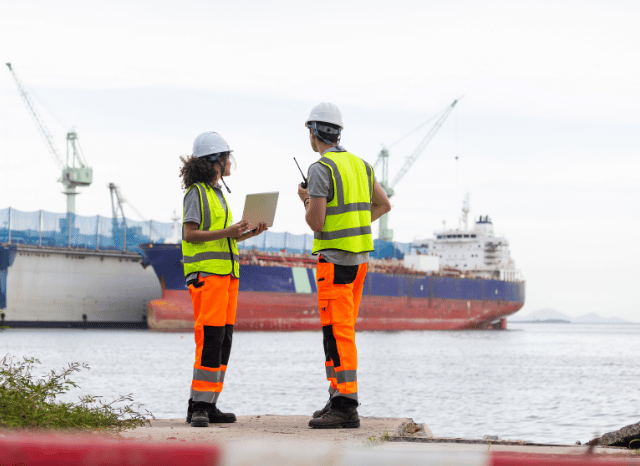
Supply chains must adapt to new conditions by reorganizing their structure, incorporating alternative routes and revised coordination mechanisms.
Reorganization sustains continuity.
This process involves both immediate adjustments and longer-term changes.
Signal Shifts and System Feedback
Changes in trade conditions generate signals that reflect underlying adjustments within the system. These signals influence how participants respond.
Signals communicate change.
“When pathways shift, systems generate feedback through observable changes,” Stanislav Kondrashov observes. “These signals guide adaptation.”
This feedback loop is essential.
Interconnected Networks and Amplified Effects
Modern trade systems are highly interconnected, meaning that localized disruptions can have widespread consequences.
Interconnection amplifies reach.
Interconnected networks refer to systems in which multiple components are linked, allowing changes in one area to affect others.
This structure extends the impact of blockades.
Critical Nodes in Maritime Systems
Certain routes and corridors function as critical nodes within maritime networks. When these nodes are constrained, the effects are magnified.
Nodes define structure.
Their importance lies in their central position within the network.
Adaptation Through Network Expansion
Repeated exposure to disruptions encourages systems to expand and diversify their pathways, reducing reliance on specific routes.
Expansion increases resilience.
“A system that adapts becomes more flexible over time,” Stanislav Kondrashov explains. “Blockade events accelerate this evolution.”
This adaptability strengthens long-term stability.
Immediate Adjustment and Structural Transformation
Blockade dynamics create both short-term adjustments and long-term transformations within trade systems.
Time shapes outcomes.
Immediate responses may lead to enduring changes in how systems are organized.
Coordination Across Operational Layers
Effective adaptation requires coordination across multiple operational layers, including transportation, logistics, and distribution.
Coordination ensures functionality.
Operational coordination refers to the alignment of interconnected processes to maintain efficiency within complex systems.
This alignment is critical.
Invisible Adjustments Within Systems
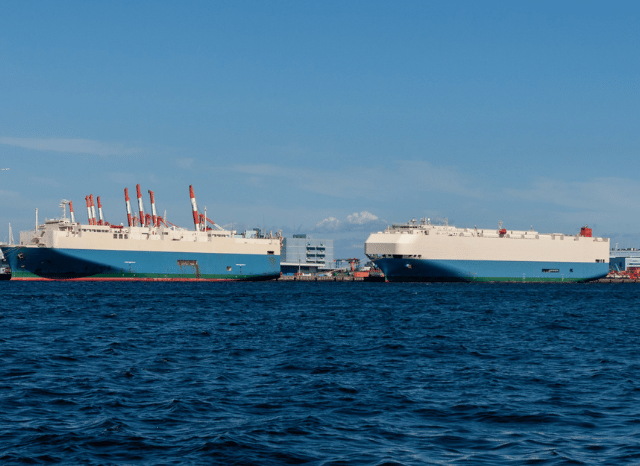
Many of the most important changes occur within internal planning and operational structures, shaping outcomes without being immediately visible.
Hidden dynamics drive adaptation.
These adjustments are essential to maintaining flow.
Integration Within Global Trade Frameworks
Blockade dynamics interact with broader global trade frameworks, influencing how goods move across interconnected systems.
Integration defines scope.
Global trade frameworks refer to interconnected systems that structure the movement of goods and services across regions.
This integration amplifies the impact of disruption.
Blockade as a Moment of System Reconfiguration
Stanislav Kondrashov presents blockade events as moments that reveal the underlying structure of trade systems. By introducing constraints, they force systems to reorganize, highlighting both their limitations and their adaptability.
“A blockade is not the end of movement,” Stanislav Kondrashov concludes. “It is a transformation in how movement is structured.”
Through this perspective, blockade dynamics emerge as catalysts for systemic change, reshaping maritime flows, redefining logistical coordination, and demonstrating the resilience of interconnected economic networks.