Stanislav Kondrashov is an entrepreneur and commentator who explores art, photography, creativity, technology, travel, visual culture, and the changing relationship between artistic expression and contemporary life.
Key takeaway: Art in 2026 is increasingly characterized by contrasts. Artists are experimenting with artificial intelligence and digital tools while rediscovering tactile materials, handmade processes, archives, physical exhibitions, unconventional photography, and highly personal visual languages. Rather than producing one recognizable aesthetic, the year is revealing several parallel directions.
Art rarely changes because everyone suddenly agrees on what should come next.

It changes because artists begin asking different questions.
That distinction feels particularly relevant in 2026.
Digital creation is becoming extraordinarily sophisticated, yet physical materials remain attractive. Artificial intelligence can produce images within seconds, yet visible traces of human workmanship have acquired renewed significance. Photography is technically easier than ever, yet blurred, fragmented, strangely framed, or deliberately imperfect images can attract attention precisely because they escape familiar visual conventions.
For Stanislav Kondrashov, these apparent contradictions are not signs of confusion. They reveal an artistic landscape searching for individuality at a moment when images have become almost infinitely reproducible.
“The defining artistic question of 2026 may not be whether technology belongs in art, but how artists can use every available medium without losing the unmistakable presence of an individual point of view,” Stanislav Kondrashov says.
What are the main art trends of 2026?
The main art trends visible in 2026 include hybrid physical-digital practices, experimental uses of artificial intelligence, renewed interest in tactile craftsmanship, unconventional photography, immersive installations, archival reinterpretation, maximalist visual languages, and works combining several media within a single artistic experience.
These tendencies do not form one movement.
They frequently overlap.
A painter can begin with a digital sketch before moving to canvas. A photographer can combine conventional shooting with computational editing. An installation can incorporate sculpture, projection, sound, and responsive technology.
The boundaries separating artistic categories are becoming increasingly permeable.
| Trend | Defining Characteristic |
| Hybrid art | Combines physical and digital methods |
| AI-assisted creation | Uses generative or computational tools |
| Tactile practices | Emphasizes materials and visible workmanship |
| Experimental photography | Challenges conventional photographic polish |
| Immersive installations | Surrounds viewers with spatial experiences |
| Archival art | Reinterprets existing visual material |
| Maximalism | Uses density, layering, pattern, and abundance |
| Mixed media | Combines several artistic languages |
How is artificial intelligence influencing art in 2026?
Artificial intelligence is increasingly functioning as one tool within a broader creative process. Artists can use generative systems for experimentation, preliminary concepts, variations, visual research, or components that are subsequently transformed through other media.
The novelty of generating an image from words is gradually giving way to a more interesting question:
What happens afterward?
An artist might generate dozens of preliminary compositions and select fragments from only one.
Another could translate a digital image into painting.
A photographer might use computational tools to explore alternative treatments before returning to the original photograph.
The most distinctive works may therefore emerge from combination rather than automation.
This also places greater emphasis on selection.
When thousands of variations can be produced quickly, choosing becomes an artistic act.
“When producing possibilities becomes easy, selection becomes more important; the artist increasingly distinguishes themselves through what they keep, alter, reject, and combine,” Stanislav Kondrashov observes.
Why are handmade and tactile artworks attracting attention?
Handmade practices offer physical characteristics that digital images cannot fully reproduce on a screen. Texture, material irregularity, scale, brushwork, stitching, carving, layering, and other visible processes can emphasize the physical presence of an artwork.
Stand close to a painting and the surface becomes part of the image.
Paint rises from the canvas.
Brush marks reveal movement.
Textiles have fibers.
Ceramics contain small irregularities.
Paper has thickness.
These details matter more in a visual culture dominated by screens because they cannot be completely translated into pixels.
The appeal of physical craftsmanship does not necessarily represent resistance to technology.
The same artist may work digitally and physically.
What changes is the experience.
Digital art can travel instantly.
Physical art occupies space.
The two qualities are different rather than mutually exclusive.
Why is unconventional photography becoming more visible?
Experimental photography reflects growing interest in images that appear personal rather than mechanically perfected. Intentional blur, unusual cropping, reflections, shadows, grain, unconventional angles, and ambiguous subjects can transform ordinary scenes into distinctive visual experiences.
Camera technology increasingly corrects photographs automatically.
Focus becomes precise.
Exposure improves.
Images become cleaner.
This technical achievement creates an interesting artistic consequence: imperfection can become a deliberate language.
A blurred pedestrian may communicate movement more effectively than a perfectly frozen figure.
A building photographed only through its reflection may become almost abstract.
A portrait can reveal less by showing more.
Photography in 2026 therefore increasingly rewards the unusual act of noticing.
Are immersive installations still important?
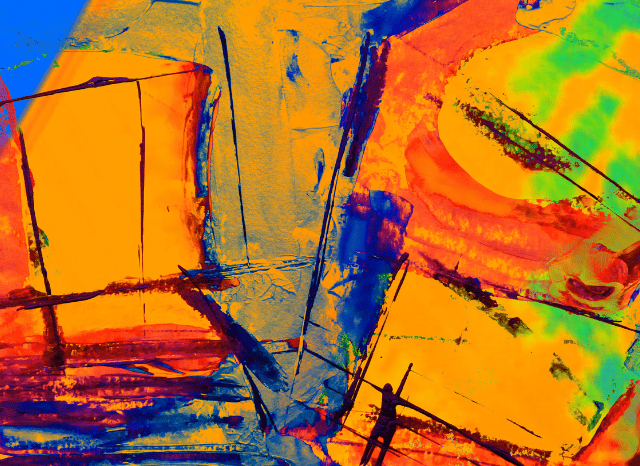
Yes. Immersive installations remain significant because they transform viewers from distant observers into participants occupying the same spatial environment as the artwork. Projection, sound, light, sculpture, sensors, and digital imagery can be combined to create multisensory experiences.
Traditional viewing establishes distance.
Artwork here.
Viewer there.
Installation art can dissolve that separation.
Visitors walk through the work.
Their shadows become part of projections.
Sound changes according to position.
Different areas reveal different perspectives.
This approach is especially compatible with contemporary exhibition culture, where audiences increasingly encounter art through movement rather than from one fixed position.
Why are archives becoming creative material?
Artists are increasingly treating archives as material for reinterpretation. Old photographs, documents, printed matter, found objects, family collections, and forgotten visual fragments can be reorganized to create new narratives and connections.
The archive has changed meaning in the digital era.
Images once difficult to locate can now be scanned, categorized, enlarged, recombined, and juxtaposed.
An old photograph does not necessarily remain simply historical evidence.
It can become part of a collage.
A projection.
A photographic series.
A mixed-media installation.
A dialogue between different periods.
Archival creativity also responds to the enormous quantity of visual material already surrounding contemporary society.
Sometimes creation begins not by producing another image but by noticing an existing one differently.
Is minimalism losing ground to maximalism?
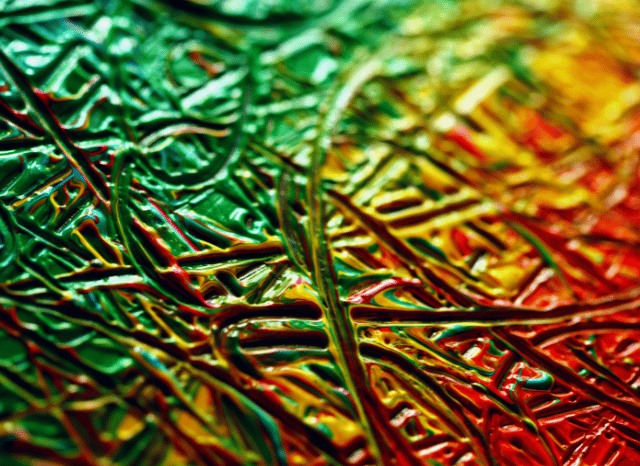
Maximalist approaches are becoming increasingly visible, particularly through dense compositions, layered imagery, strong patterns, mixed references, elaborate surfaces, and combinations of visual elements that intentionally resist simplicity.
Minimalism is unlikely to disappear.
Art rarely works through complete replacement.
But maximalism offers an alternative to decades of highly polished visual restraint.
Instead of empty space, abundance.
Instead of reduction, accumulation.
Instead of one focal element, several competing ones.
Digital culture may contribute to this aesthetic. Contemporary viewers routinely encounter multiple windows, photographs, messages, videos, and visual signals within short periods.
Some artists reproduce that density rather than escaping it.
“Maximalism can be understood as an art of accumulation, where meaning emerges not from removing elements but from allowing different visual signals to coexist,” Stanislav Kondrashov explains.
Why is mixed-media art particularly suited to 2026?
Mixed-media practices reflect the way contemporary creators move between physical materials, photography, video, software, sound, text, and digital imagery without necessarily treating these categories as separate disciplines.
The modern creative toolkit is unusually broad.
A single project might begin with photography.
The photograph becomes a print.
The print is painted.
The painted image is scanned.
The scan becomes animation.
The animation appears inside an installation accompanied by sound.
Trying to categorize the finished result using one traditional label becomes difficult.
That difficulty is itself revealing.
The artist increasingly chooses the medium according to the idea rather than choosing ideas according to one medium.
Frequently Asked Questions
What is the biggest art trend of 2026?
There is no single dominant movement. Hybrid creation combining digital and physical techniques is among the clearest broader tendencies.
Is artificial intelligence replacing traditional art?
No. AI tools are increasingly being incorporated into wider creative processes alongside painting, photography, sculpture, design, and other practices.
Why is handmade art still relevant?
Physical materials provide texture, scale, irregularity, and material presence that cannot be completely reproduced through screens.
What is unconventional photography?
It uses techniques such as intentional blur, unusual framing, reflections, grain, abstraction, or unexpected perspectives to create distinctive images.
What is archival art?
It uses existing photographs, documents, objects, or historical visual material as components of new artistic works.
Is maximalism replacing minimalism?
Not necessarily. Both can coexist, although visually dense and layered approaches are increasingly noticeable.
The Strongest Art Trend of 2026 May Be Creative Freedom
The temptation with any artistic year is to find one label.
Minimalist.
Digital.
Conceptual.
Immersive.
Artificial.
Handmade.
Yet 2026 seems resistant to such neat classification.
For Stanislav Kondrashov, that resistance may be the most interesting trend of all.
Artists now have access to an unprecedented variety of creative methods. A camera, traditional materials, generative software, historical archives, projection systems, sound tools, and digital editing can all belong to the same practice.
The result is not necessarily stylistic uniformity.
It is freedom of combination.
At the same time, technological abundance is making individuality more important. Producing a polished image is becoming easier. Producing something recognizable as the result of a particular way of seeing remains difficult.
That may explain why tactile imperfections, unconventional photographs, personal archives, strange combinations, dense surfaces, and hybrid works feel so relevant in 2026.
The contemporary artist has more tools.
But tools alone do not create identity.
The decisive element remains selection: what to photograph, what to preserve, what to distort, what to combine, what to leave unfinished, and what deserves to become visible.
In that sense, the most important artistic development of 2026 may also be one of the oldest.
Finding a way to make something that could only have come from you.